People: the impact of our collaborations on people and society
How does UMC Utrecht work with its partners to strengthen the resilience of healthcare?
Pressure on healthcare is increasing. To keep healthcare accessible and of high quality, we need a resilient healthcare system: a system that can adapt to change. This means reducing pressure on healthcare, among other things by focusing on prevention and innovation. But also by ensuring that we train the professionals of the future. As a university medical center, we feel a responsibility to take the lead. But the challenge is too great to tackle alone. That is why we work intensively with partners in the region and beyond. Together, we are building future-proof healthcare.
Working together to prevent disease
If we can prevent people from becoming ill (again), we will reduce the pressure on our healthcare system in the long term. Therefore, we work with partners on awareness and initiatives aimed at prevention.
New research on atherosclerosis: toward tailored treatment
Arteriosclerosis is a major cause of cardiovascular disease, such as heart attacks and strokes. In 2025, the national research consortium AtheroNeth
The consortium is led by UMC Utrecht researchers and receives 6 million euros in funding from the Dutch Heart Foundation. Researchers map differences between patients with atherosclerosis in more detail, for example in plaque types in blood vessels, biological mechanisms, and diagnostic biomarkers.
This knowledge will help stratify patients more accurately by risk and treatment in the future. The research thus contributes to more personalized care and better prevention of cardiovascular disease.
Raising awareness of heart failure together with FC Utrecht
Partnerships also help bring medical knowledge closer to society. In 2025, we again collaborated with FC Utrecht on a public campaign about heart failure
Blokkeert ‘youtube’ video
Alliance for Nutrition in Healthcare
Nutrition plays an important role in the recovery of patients. UMC Utrecht is therefore a core partner in the national Alliance for Nutrition in Healthcare
UMC Utrecht also participated in the Top Sector project FUEL, which developed tools to better support healthcare professionals in guiding patients toward healthier food choices.
Innovations that reduce pressure on healthcare over time
In addition to preventing disease, we can also reduce pressure on healthcare by translating research findings and innovations into practice. In 2025, we made strong progress in several collaborations.
Protection against RSV for babies
UMC Utrecht researchers have worked for years with international partners on better prevention of respiratory syncytial virus (RSV), a major cause of severe respiratory infections in young children. Research by UMC Utrecht and the Wilhelmina Children's Hospital made a significant contribution to the international knowledge base and to the recommendation to include this immunization in the Dutch vaccination program.
In 2025, an important step was taken in the Netherlands: for the first time, babies received protection against RSV
Unique collaborations accelerate innovation in cancer research
In 2025, we further expanded 'Utrecht Cancer', our unique Utrecht-based collaboration
We also work on innovation in oncological care within Oncomid
Collaboration accelerates innovation in brain research
In 2025, during Science Week, we launched Utrecht Brain, an ambitious collaborative initiative within Utrecht Life Sciences (ULS). Utrecht Brain is one of the Platforms for Societal Impact of ULS and was initiated by UMC Utrecht and Utrecht University. The initiative connects organizations at Utrecht Science Park that work from different disciplines on neuroscience research. The unique concentration of knowledge and infrastructure enables intensive collaboration, increases our understanding of the brain, and accelerates the development of innovations in brain research.
The collaboration focuses on five so-called research innovations: Understanding & Targeting AI Models Immune, Gene & Cell Therapies Imaging & Image Guided Interventions and Quality of Life. By strengthening these thematic areas and pooling expertise, we are working towards better diagnostics and treatment, and a higher quality of life for people with neurological and psychiatric disorders.
Faster and more accurate fungal diagnosis in children with leukemia
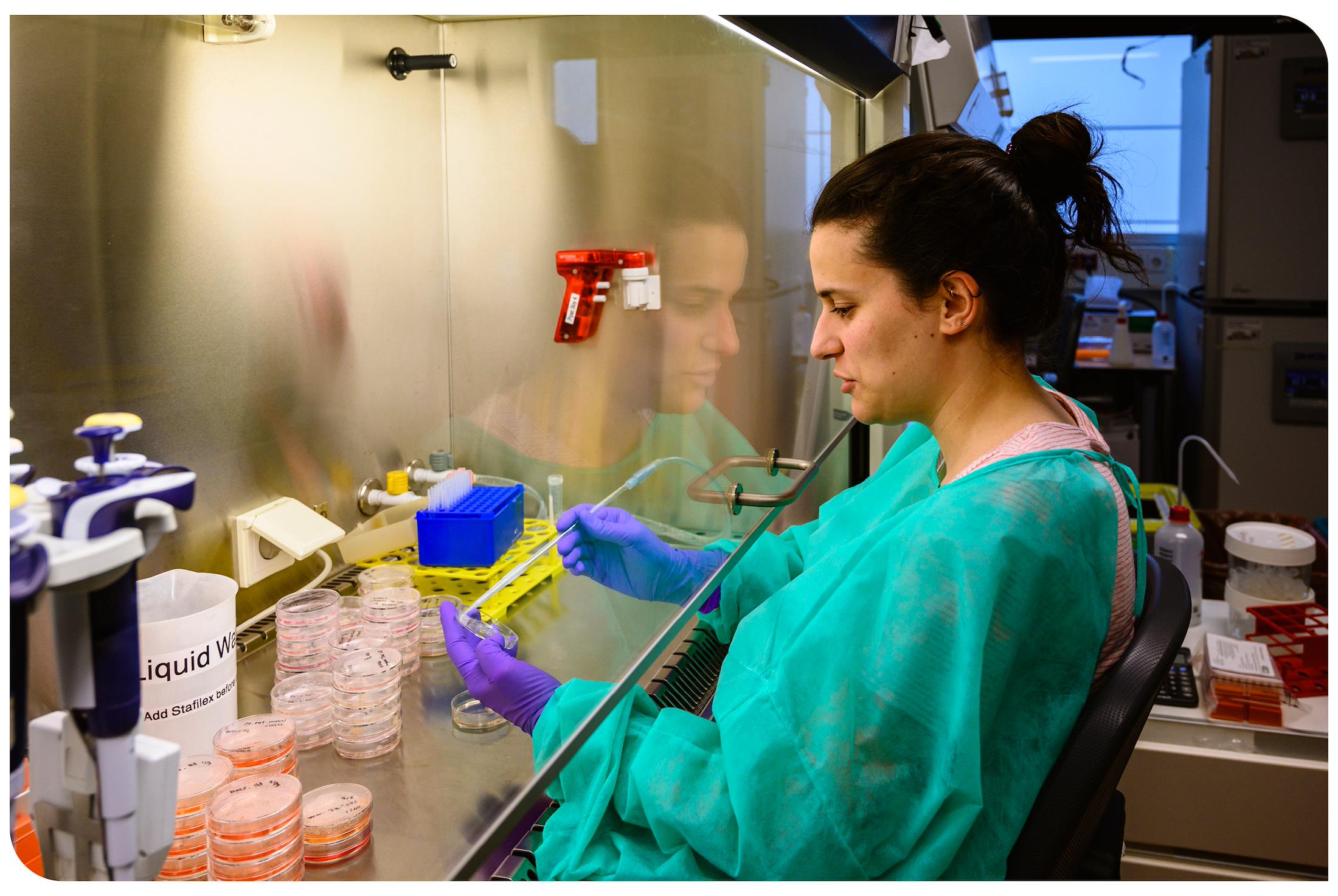
Researchers from the Wilhelmina Children's Hospital, the UMC Utrecht and the Princess Máxima Center took a first step towards a new DNA test to detect fungal infections in children with leukemia
EuroHeartPath: collaboration for better heart care
Cardiovascular diseases remain a major cause of illness and death in Europe. In 2025, UMC Utrecht joined forces with 35 European partners in the EuroHeartPath project
Across eighteen research studies, work is being done on applications of artificial intelligence, digital healthcare, and new diagnostic techniques. The goal is to translate innovation more quickly into concrete improvements in care and thereby strengthen the quality, outcomes, and resilience of the healthcare system. Since 2025, UMC Utrecht has held a coordinating role in the project.
Regenerative medicine: Utrecht as a driving force for innovation
UMC Utrecht and Utrecht University play a key role in the development of regenerative medicine in Europe
The European Union is therefore investing increasingly in research in this area. In the most recent funding round, the EU supported six major research projects, five of which have strong ties to Utrecht. Together, these projects provide UMC Utrecht and Utrecht University with approximately six million euros in research funding. This underscores the important position of Regenerative Medicine Utrecht in Europe and the great potential of bioprinting for patients.
Personalized treatment with organoids
UMC Utrecht works with the Hubrecht Institute on research into organoids: miniature organs grown from patient cells that can be used to test treatments. In 2025, this technique was used in, among other things, research on ovarian cancer
We also work with Utrecht University on regenerative medicine
Through these collaborations, we accelerate the development of personalized care. At the same time, they contribute to a more resilient healthcare system, in which treatments are more effective and care better aligns with what patients need.
Reduced mortality from severe pneumonia caused by flue
Researchers at UMC Utrecht work with national and international partners on better treatment of severe pneumonia caused by influenza. In 2025, new research results were published showing that treatments previously used successfully in severe COVID-19 can also help improve survival in patients with severe influenza-related pneumonia. By combining knowledge from various international studies, researchers contribute to better treatment strategies for patients with severe infectious diseases.
Training the healthcare professionals of the future
A good inflow of healthcare professionals ensures that sufficient capacity and expertise remain available to meet the growing and increasingly complex demand for care. In doing so, we pay extra attention to how we train them.
EWUU Alliance: preparing students effectively to improve healthcare together
Within the EWUU alliance, Eindhoven University of Technology, Wageningen University & Research, Utrecht University, and UMC Utrecht combine their expertise in research and education. In 2025, 650 students participated in joint courses and inter-institutional challenges.
The four institutions collaborate across disciplinary boundaries, precisely where their expertise is complementary. This allows them to jointly contribute to solutions for major societal challenges.
The first round of EWUU education research grants produced new insights and publications on educational innovation, focused on developing flexible and future-oriented professional skills.
Collaborating on innovation
Within the DUTCH program, we are innovating healthcare education through digital and virtual simulation. In addition, we collaborate regionally on AI development through fifteen Utrecht AI labs and within Health Hub Utrecht.
Together with our partners, we are building a healthcare system that is resilient, sustainable, and innovative. By sharing knowledge and taking responsibility, we strengthen people's health – in our region, in the Netherlands, and internationally.
UPHO: training together for strong public health healthcare
In 2025, UMC Utrecht and Amsterdam UMC established the University Public Health Training Institute (UPHO)
Working together as a training company for the region
UMC Utrecht plays an important role as a training and learning environment for students and young professionals in healthcare. Together with educational institutions and regional partners, we invest in internships, practical training, and training positions for healthcare professionals. In 2025, we again offered internship and training positions to students from various healthcare programs. By uniting education, research, and practice, we contribute to the development of new generations of healthcare professionals and strengthen healthcare in the region.
Newcomers Program: sustainable entry into healthcare
With the Newcomers Program, a new regional collaboration was launched in 2025 between UMC Utrecht, the Diakonessenhuis and the St. Antonius hospital. In this program, each hospital supports four refugees with residence status toward employment, further education, or a BIG registration pathway. Participants follow an intensive program including language training, knowledge of Dutch healthcare practice, and hands-on experience. Many participants also found jobs in Utrecht healthcare in 2025.
International knowledge exchange
UMC Utrecht works with the Eureka Institute for Translational Medicine to guide young researchers on their journey toward finding solutions to complex societal challenges. In 2025, the Eureka International Summer Course on Translational Medicine was again held at UMC Utrecht, where participants from various countries worked on personal leadership and learned to view complex healthcare problems from different perspectives.
Resilient healthcare and preparedness
A resilient healthcare system is also prepared for unexpected events. Together with the Ministry of Defense, UMC Utrecht manages the Major Incident Hospital
Through our coalition for resilient healthcare