People: our impact on patients and society
How does UMC Utrecht make sure the focus is on the person behind the patient?
Each person is different. And everyone has their own wishes, concerns, and boundaries. That is why at UMC Utrecht we look not only at the illness, but also at the person. What is important in someone's life? What gives meaning? And what does a treatment mean in daily life?
We would like to get to know you
An important tool for this is the questionnaire 'We would like to get to know you' and for children 'We would love to get to know you'. With five short questions, we invite patients to share what matters to them. For example: which activities are important? Who are the important people in your life? And what are you worried about? The answers serve as a basis for the conversation between patient and healthcare professional. This leads to care that is not only medically sound, but also fits a person’s life.
Blokkeert ‘youtube’ video
In 2025, we placed additional focus on this approach. Our goal was to encourage care professionals to apply the questionnaire more consistently in their practice. To this end, we have asked colleagues to share their good practices.
A scientific article on the development and application of the questionnaire was also accepted for publication in BMC Health Services Research. This contributes to the growing evidence base for person-centered care.
In addition, thanks to a ZonMw grant within the Appropriate Care framework program, we launched the Start2Care project. This project focuses specifically on vulnerable older patients undergoing surgery. The goal is to structurally embed person-centered care in their treatment pathway.
Value-based care: shared decision-making with better insights
At UMC Utrecht, we have been working with patients on value-based care for many years. In this approach, patients and care professionals make decisions together, based on what matters most to the patient. We look not only at medical outcomes, but also at how patients experience their health and quality of life.
In 2025, as a leading hospital in value-based and outcome-driven care, we received a grant to launch new pilots. These include developing a blueprint for the Patients-like-me dashboard and exploring how AI can extract useful information from unstructured EPR data. We also use the grant to actively share knowledge about value‑based care, both within UMC Utrecht and with other organizations.
Another important step was the integration of our PowerBI dashboards into the Electronic Health Record (HiX). This makes outcomes and insights directly available in the consultation room. This makes it easier for healthcare professionals and patients to make decisions together about the most appropriate treatment.
Reflecting and improving together
Good care also means: evaluating together. In 2025, we studied experiences with care evaluation conversations on pilot wards. Around day four of admission, nurses schedule a conversation with the patient, prepared using five guiding questions. This approach helps adjust care in a timely manner and strengthens collaboration. Early experiences are positive and provide reason to continue, although it sometimes requires smart integration into daily workflows.
We also continue to learn structurally from patient experiences through our Patient Experience Monitor (PEM).
Patients gave us a score of 8.7 in 2025.
In the outpatient clinic, 7,910 adults completed the questionnaire; in inpatient care, 7,228 patients participated in 2025.
Deciding together and learning together
In 2025, together with partners, we developed a new national decision tool for people with metastatic bladder cancer. This decision tool supports patients and physicians in choosing a treatment that aligns with personal preferences and quality of life.
We also continued investing in existential care: care that focuses on what truly matters to the patient. In the Neuro‑Oncology Department, we are studying how patients and families experience these conversations and what they mean for healthcare providers.
Buddy program for trauma patients to provide more support
In 2025, the buddy program for trauma patients at UMC Utrecht received a significant boost. Through a buddy system, peer-to-peer contact, and an annual reunion day, trauma patients gained more space for their own voice and mutual support. This led to structural patient participation and the establishment of the Trauma Survivor Network Utrecht foundation. In this way, in addition to medical care, we explicitly invest in psychological aftercare and social support.
Developments in digital accessibility
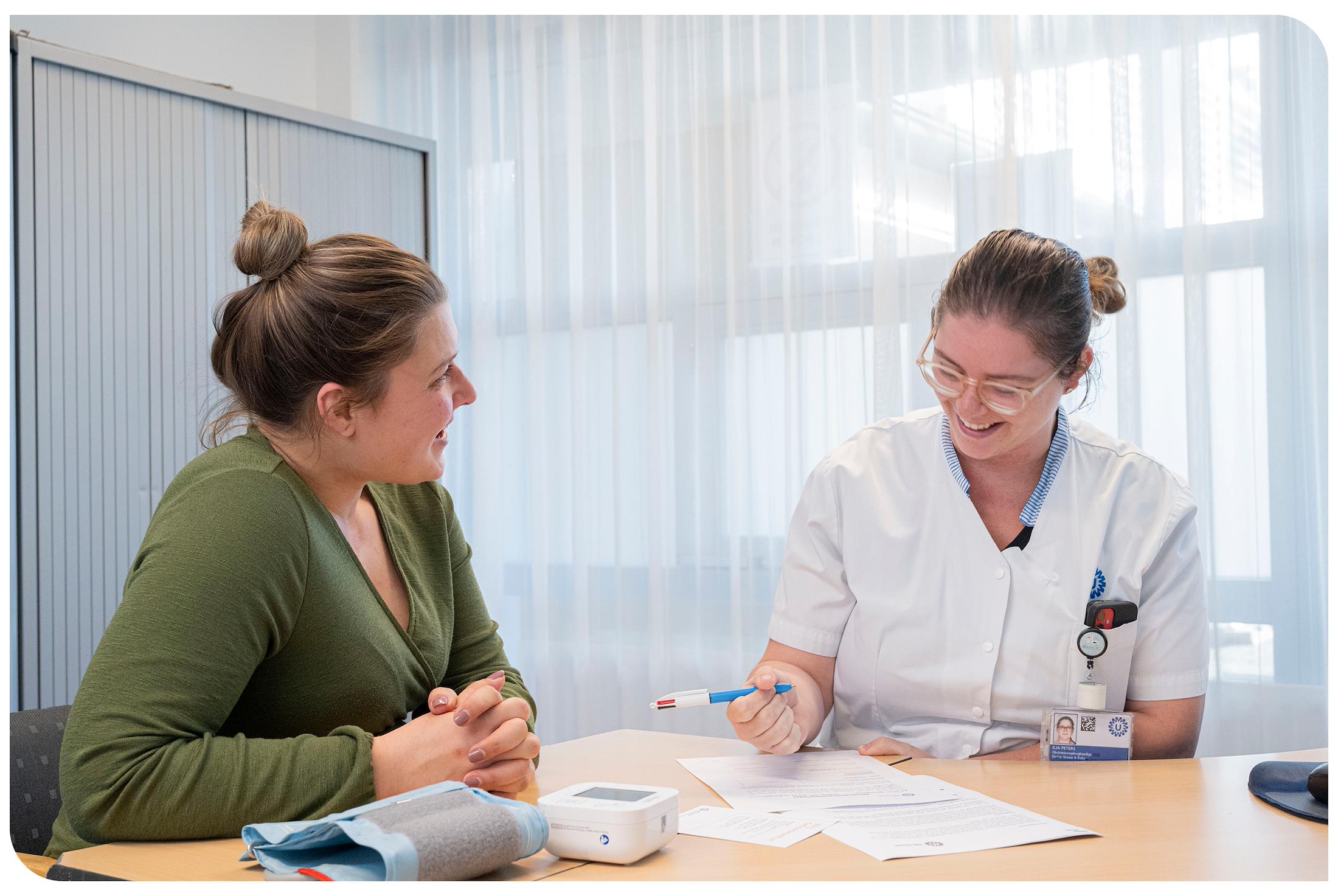
Person-centered care requires understandable information. In 2025, we improved the digital accessibility of our website, including through the implementation of Assist, which allows visitors to adjust the presentation themselves. For example, larger or different fonts, more or less (color) contrast, or hiding images. These adjustments can improve readability. During the Week of Reading and Writing, we once again paid extra attention in 2025 to communication with people with limited health literacy. For example, by avoiding complicated words. Instead of ‘prevention’, we now say ‘preventing disease’. And instead of ‘intramuscular’, ‘in the muscle’. In order to help our healthcare professionals in this regard, we launched the game ‘Which word do you replace?’ for and with patients in 2025.
Better understanding of antibiotic use in children through interactive booklet
In 2025, we also launched an interactive booklet designed to help reduce unnecessary antibiotic use in children with fever. Researchers from UMC Utrecht, Maastricht University, LUMC, and Erasmus MC collaborated to improve an existing booklet so that it better meets the needs of all parents, including those with limited health literacy.
Let every child be a child as much as possible
At the Wilhelmina Children's Hospital, part of the UMC Utrecht, the child is at the center. We see not only the patient, but also the child who wants to play, learn, and develop. Our healthcare professionals work together with parents as one team in the care surrounding the child, with attention to the entire family. Our care – from pregnancy to young adulthood – is organized under one roof as much as possible. Through close collaboration between specialists, we can treat children with complex or rare conditions quickly and carefully. We do this in specialized centers such as the Spieren voor Spieren Children's Center, the Center for Congenital Heart Defects and the Birth Center.
Serious request en Spieren voor Spieren
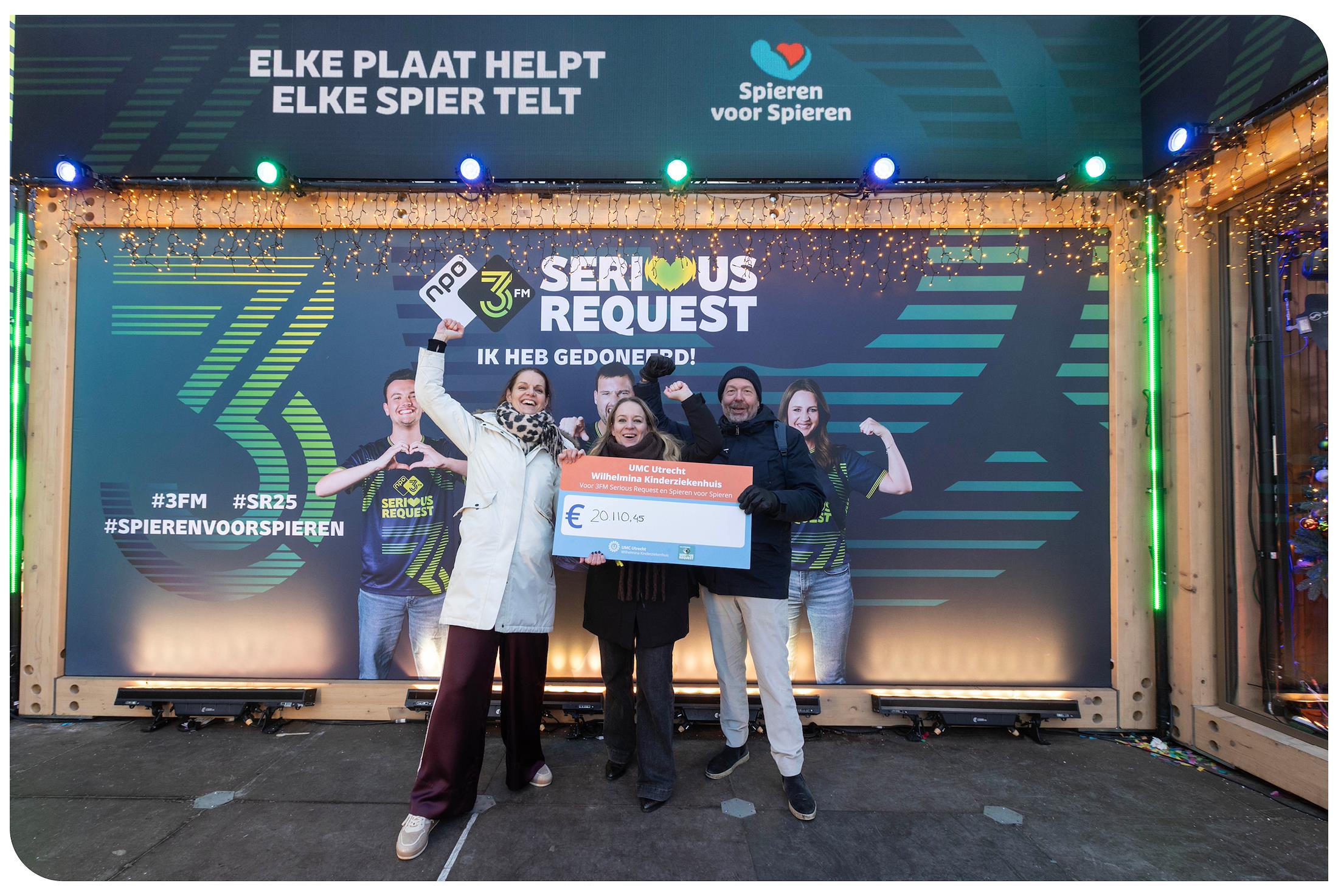
In 2025, during 3FM Serious Request, the Netherlands mobilized for Spieren voor Spieren. An impressive amount of money was raised that can really make a difference for children with a muscle disease: the final amount was 18,848,700 euro. With this funding, Spieren voor Spieren can support research into better treatments and medications, faster diagnosis, and promoting physical activity for children with muscular diseases. The Wilhelmina Children's Hospital is the largest pediatric muscle center in the Netherlands. We expect that the proceeds will also help us conduct even more research into muscular diseases in children.
International collaboration in pediatric palliative care
Within the European project Palliakid, UMC Utrecht collaborates with international partners on better palliative care for children.
The project uses the IMPACT conversation method, developed in Utrecht. This method helps healthcare providers, children, and parents to discuss treatment goals and quality of life together.