Our impact on fair and reliable research
How does UMC Utrecht ensure transparent and socially responsible research?
Reliable research is the foundation of good healthcare. That is why we invest in a research culture centered on quality, transparency, and integrity. Fair and reliable research also requires clear agreements, transparency, and continuous improvement. In 2025, we made concrete progress in several areas.
At UMC Utrecht, the Faculty Open Science Team (FOST) plays an important role in this effort. This team encourages researchers to make their working methods more transparent, for example by better documenting research processes and responsibly sharing data and results. FOST meets regularly to exchange knowledge and experiences and to provide practical support to researchers in applying Open Science principles. This allows us to strengthen the quality, verifiability, and reproducibility of our research.
New Open Access policy: research accessible to everyone
UMC Utrecht is taking an important step towards full Open Access. Starting 1 January 2026, short scientific publications by UMC Utrecht researchers will be made publicly available through the Utrecht University Repository. This also applies to articles originally published in subscription-based journals, retroactively to 2015.
With this policy – adopted by the Executive Board of UMC Utrecht – we make publicly funded research widely accessible to other researchers and to society. Researchers may make use of an opt-out arrangement if desired. By actively sharing knowledge, we strengthen the transparency, verifiability, and societal impact of our research. This way, we contribute to open and reliable science.
Accelerating animal-free biomedical innovation together
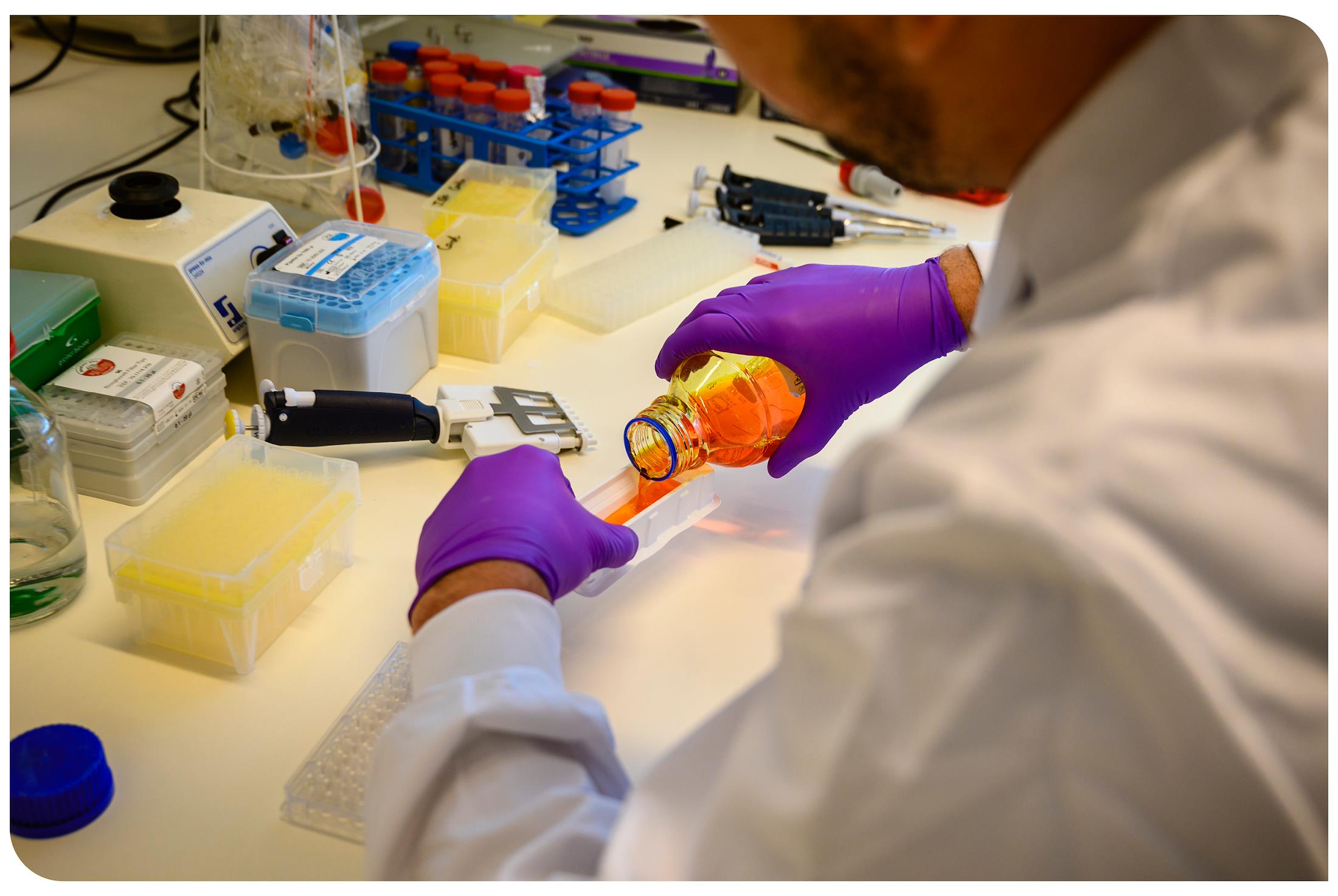
In 2025, we continued investing in better, human-centered research models through Ombion-Center for Animal-Free Biomedical Translation (Ombion-CPBT). The primary goal is to bring treatments to patients faster and more reliably. In July 2025, the Ombion Center for Animal-Free Biomedical Translation was officially launched, supported by the National Growth Fund. The center focuses on accelerating animal-free biomedical innovations and improving the translation of research into patient applications. More than sixty public and private partners collaborate within the center. UMC Utrecht plays a central role, including in projects related to ALS and cystic fibrosis. Through this work, we strengthen the quality, predictive value, and societal impact of biomedical research.
With our commitment to Open Science and innovative research models, we are building a research culture centered on quality, transparency, and societal responsibility. This ensures that our research is not only innovative, but also fair, verifiable, and focused on impact for patients.
Scientific Integrity
Scientific integrity is essential for both the quality of scientific research and public trust in science.
In 2025, we worked to make scientific integrity more visible and easier to discuss within UMC Utrecht. We initiated conversations at symposia and conferences based on the ‘Wheel of Integrity'. For PhD candidates, training in scientific integrity is a mandatory part of their program. In 2025, the Graduate School of Life Sciences developed a complementary training for PhD supervisors, which will become mandatory in 2026. At the end of 2025, Ghislaine van Thiel began her role as Faculty Contact Person for Scientific Integrity. She will work to strengthen an open, safe, and inclusive research culture and ensure a low threshold for reporting concerns about potential violations of scientific integrity standards.
EDI policy: UMC Utrecht Inclusive network
Working together toward inclusive healthcare, education, and research is essential for transparent and socially responsible science. In 2025, we established the UMC Utrecht Inclusive network for this purpose. This network is part of our broader Equity, Diversity and Inclusion (EDI) policy and aligns with the transformation of our organization. Through this network, we encourage the sharing of knowledge and experience, so that we take differences between people better into account in our work. This applies across all our core tasks: healthcare, education, and research.
In research, this means looking more consciously at who our results apply to. By paying attention to diversity – for example in gender, ethnicity, and socioeconomic background – we increase the quality and applicability of our research. There is room for dedicated research on these themes, as well as for structurally embedding diversity as a quality requirement. In the coming years, we will work to make inclusivity a natural part of everything we do.
International SEP committee: our research is of very high quality
Our daily commitment to transparent and socially responsible research was recognized in 2025 during the SEP review by an international committee. The SEP evaluation confirmed that UMC Utrecht’s research is of very high quality, and in some areas excellent, with the bench-to-bedside approach and strong focus on translational and clinical research highlighted as major strengths.
The international committee expressed appreciation for how we structurally integrate Open Science, research integrity, and patient participation into our research: “The dedication of UMC Utrecht to promoting Open Science, research integrity and patient participation is laudable.” These elements contribute to transparent, reproducible, and socially relevant research and strengthen trust in science and healthcare. The committee also emphasized that our strategic focus – organizing research around multidisciplinary themes closely connected to healthcare – enhances innovation and visible impact for patients and society.
The committee identified opportunities for further strengthening, including structuring and consolidating ongoing efforts in openness, social safety, diversity and inclusion, and mentoring, and increasing PhD completion rates through targeted analysis and follow-up on delaying factors. These focus points align with insights from our own self-evaluation and the development of the Research & Innovation Center, where we are working on better support, sharper choices, and more efficient processes. As an organization, we have already begun this process as part of our transformation, and we will continue to follow up on these recommendations in the coming years. Implementation lies with the relevant parts of our organization, including People & Organization, the Research Office, and the various themes and focal points. In this way, we continue to strengthen our research in a targeted manner and build further on fair, reliable, and impactful science.