
Environment: The impact of our research on a healthier world
What Planetary Health research is UMC Utrecht conducting?
The environment in which we live has a major impact on our health. That is why UMC Utrecht conducts research in the field of Planetary Health: the relationship between human health and the health of our living environment. We study how environmental factors, such as air quality, urban design, and emerging forms of pollution, contribute to disease, and how we can use this knowledge to improve health and prevent diseases.
Exposome-NL and healthy urban living
Within the national Exposome-NL program, researchers work together to gain an understanding of how the living environment affects health. In 2025, UMC Utrecht and Amsterdam UMC researchers demonstrated within the Exposome-NL program that the living environment has a clear impact on cardiovascular disease risk. People living in neighborhoods with many unhealthy food outlets and few opportunities for physical activity have an almost five percent higher risk of cardiovascular disease. These results were published in 2025 in The Lancet Regional Health Europe.
Building on these and other scientific insights, researchers developed digital twins of neighborhoods, cities, and their residents. These digital environments allow experimentation with interventions before they are implemented in real life. For example, researchers can test the effects of changes in mobility, food environments, or urban design on health. And at least as important: for whom exactly these effects occur. This enables interventions that are not only more effective but also more equitable, contributing to fairer health outcomes. To ensure broad applicability, the model was developed using open-source software, allowing cities and regions to adapt and use it in their own context. The model and initial simulation examples were published in Environmental International.
In addition to simulations, the insights are also applied in practice, such as the Utrecht neighborhood Cartesius. Within the Data and Knowledge Hub Healthy Urban Living UMC Utrecht, Utrecht University, Utrecht University of Applied Sciences, the Municipality and Province of Utrecht, and private partners collaborate on designing a neighborhood that promotes health and wellbeing.
In the Cartesius RAAK-PRO research project, funded by the SIA Steering Committee in 2025, partners study how neighborhood design can support healthy behavior and wellbeing among residents.

EXPANSE: the influence of the living environment on health
In 2025, the European EXPANSE project was successfully completed, demonstrating the significant impact of the living environment on health. The research shows that a substantial portion of the disease burden of cardiovascular and lung diseases is linked to urban environmental factors such as air pollution, temperature, and green space. Three papers published in 2025 highlight these findings. Importantly, the combination of environmental factors appears to have the strongest effect on health. These insights support better decision-making in prevention, urban planning, and healthcare, from general practice to specialized treatment.
Published papers in 2025:
These scientific, societal, and translational results – with major impact – were recognized at the European level: in 2025, the EU selected EXPANSE as a flagship example project. The project bridges environmental science and medical practice. The project has delivered tools, data, and insights that contribute to primary prevention, early risk detection, and targeted interventions, with clear relevance across the entire healthcare chain.
AURORA: understanding environmental influences on health from the very beginning
Through the AURORA project, UMC Utrecht has contributed since 2025 to strengthening European knowledge about the health risks of micro- and nanoplastics (MNPs). This is a growing and socially urgent challenge. This urgency is underscored by the recent Lancet Countdown on Health and Plastics, published in The Lancet with contributions from UMC Utrecht researchers, which estimates the global health burden of plastic pollution at more than 1.5 trillion US dollars per year.
The AURORA study focuses on exposure during pregnancy and in the early stages of life – periods that are critical for long-term health. AURORA shows that micro- and nanoplastics are detectable in human tissues, including the placenta. There are also indications that these particles may affect key biological processes such as inflammation, hormonal regulation, and early development. The project has made major advances in developing and validating analytical methods to reliably measure these particles in complex human samples. It has also developed new, scalable methods for population-level biomonitoring.
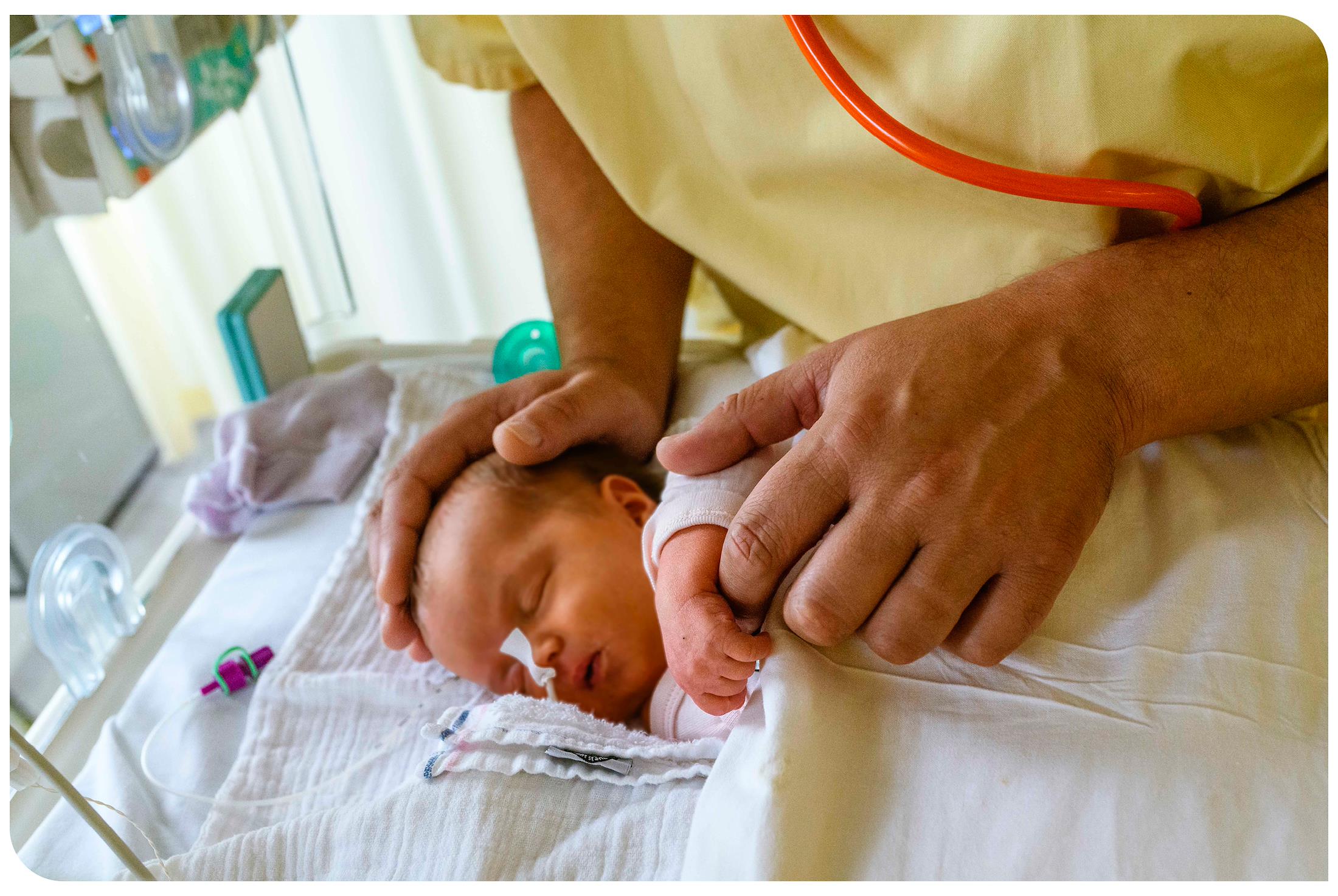
By integrating insights from toxicology, epidemiology, and exposure science, AURORA contributes to a more systematic assessment of health risks. This supports a practical European approach that can guide future regulation and prevention strategies. For UMC Utrecht, this provides a concrete foundation for better integrating emerging environmental risks into healthcare and public health – for example by increasing risk awareness and developing strategies to reduce exposure, including within fertility care and IVF pathways. At the same time, the project strengthens our position as a leader in exposome research and preventive medicine.
ExpACT: measuring exposures in real-life settings
With the recently launched ExpACT project, we are building on earlier exposome research. This NWA-ORC project focuses on the air component of the exposome and develops new ways to measure chemical and biological exposures in real time and in real-world environments. A defining feature of ExpACT is that it does not only advance technological innovation, it explicitly connects the entire knowledge chain, from measurement and data analysis to societal application, policy, and actionable perspectives for citizens, professionals, and governments. The project directly addresses urgent societal challenges related to mobility, energy, urban greening, and sustainable food systems.
UMC Utrecht plays a key role within ExpACT. Drawing on our expertise in measuring and interpreting biological exposures and allergens, we contribute substantive knowledge. We also hold a leading role in the Cartesius Living Lab in Utrecht. This is a real-life test environment in which we develop and test innovations together with residents, governments, and partners.
Through this collaboration, ExpACT is directly connected to initiatives such as the Data and Knowledge Hub Healthy Urban Living and the Cartesius Covenant. As a result, ExpACT contributes not only to better understanding environmental exposures but also to concrete applications. For instance, interventions and decision-support tools that contribute to prevention, a healthier living environment, and the further development of primary healthcare.
Circular Society: research on sustainable care and planetary health
At UMC Utrecht, we work with partners on research that contributes to a healthier world. For example, we contributed to several projects within the EWUU Institute for a Circular Society, focused on planetary health. A key milestone in 2025 was the awarding of the MECH‑I project by ZonMw, led by Associate Professor Ewoud Schuit. In this project, we develop and test practical tools that help healthcare professionals incorporate the environmental impact of treatments into their clinical decisions.
We also worked on initiatives that raise awareness, such as the development of a ‘Water Care’ installation. This installation visualizes how much water hospitals use and how pharmaceuticals affect wastewater quality. In addition, we produced a video illustrating differences in material use during childbirth in the Netherlands and Suriname. Through projects like these, we connect research and practice and contribute step by step to more sustainable healthcare.
Making our own research sustainable: Freezer Project and Freezer Challenge
In 2025, laboratory colleagues worked intensively on a freezer project aimed at reducing energy use and costs. Phase 1 was completed, during which all freezers were registered in Ultimo and samples and boxes were reorganized. This yielded valuable insights – for example, 35 percent of freezers had already been adjusted from −80°C to −70°C. We also identified which freezers were oldest and most energy-intensive. In Phase 2, old freezers will be replaced with newer, more sustainable models.
Alongside the freezer project, UMC Utrecht participated in the National Freezer Challenge 2025, together with more than 50 departments across Dutch university medical centers and eight additional institutes (Princess Máxima Center for Pediatric Oncology, Elisabeth‑TweeSteden Hospital, Certe, Labmicta, Diakonessenhuis, Isala Hospital, Utrecht University, and the Netherlands Institute for Neuroscience).